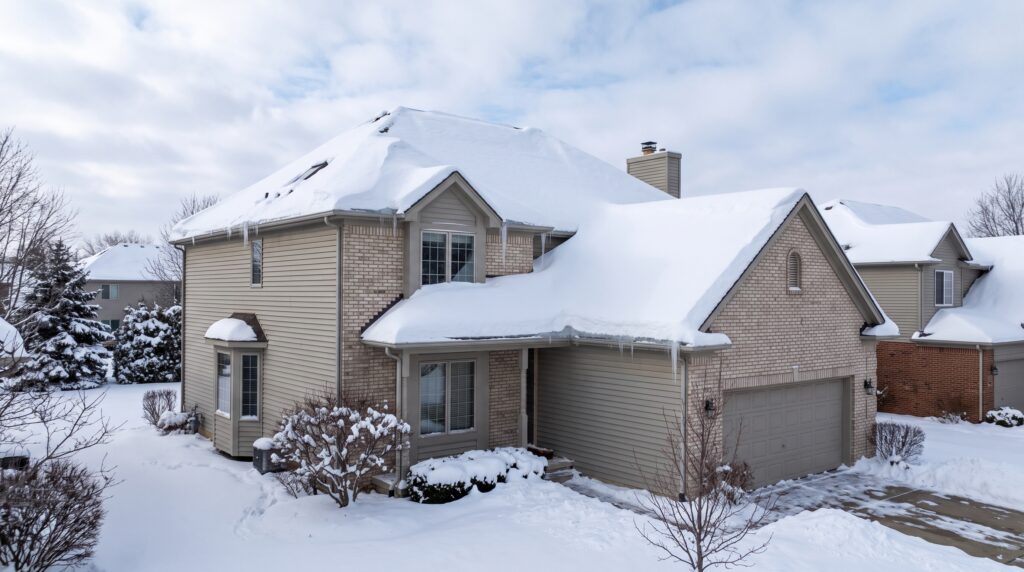
There is ice at the eave, water is coming through the bedroom ceiling, and something has to happen today. That is the situation, and it is where most ice dam damage is actually caused — not by the ice, but by what gets done to remove it.
Here is what works, what to refuse, and what to deal with before we are in that situation at all.
First, what you are looking at
Heat escaping into the attic melts snow on the upper roof. The meltwater runs down to the eave, which sits over open air and is therefore cold, and refreezes. That ridge of ice grows, and subsequent meltwater backs up behind it and under the shingles.
Shingles shed water running downhill. They do not hold back standing water pushing uphill, which is how it reaches the deck and then the ceiling. We went through the cause in why ice dams form and what actually stops them.
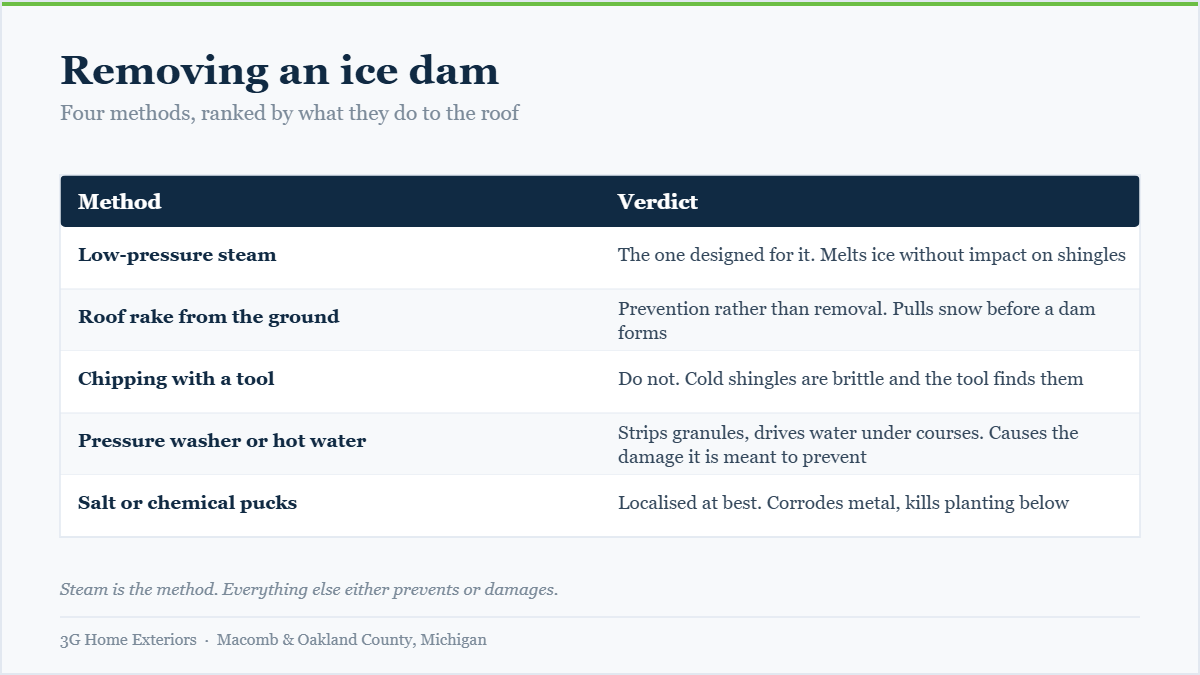
Steam is the method
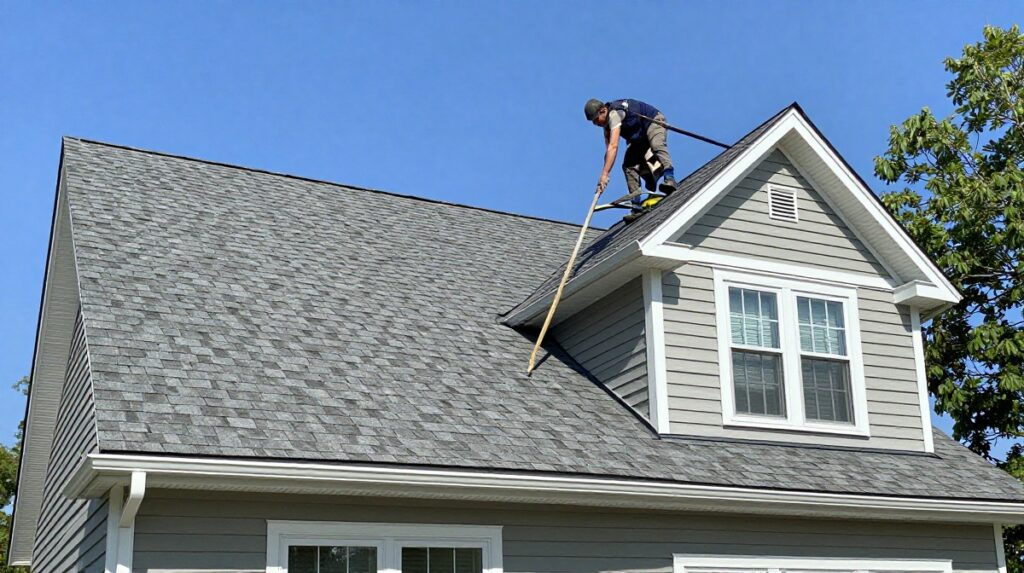
Low-pressure steam melts the ice and leaves the roof alone. A steamer delivers heat at low pressure, so the ice releases without anything striking or scouring the shingles.
The distinction that matters: a steamer is not a pressure washer running hot water. They look similar and they are not the same tool. A pressure washer delivers force, and force on a cold asphalt shingle strips granules and drives water under the courses.
Ask specifically whether the equipment is a low-pressure steamer. It is a fair question and the answer is quick.
What to refuse
Chipping with an axe, hammer or spade. Asphalt shingles at freezing temperatures are brittle. A tool that breaks ice breaks shingles, and you will not know how many until spring. This is the most common cause of ice dam damage we repair.
Pressure washing. Strips granules, which are the shingle protection against sunlight, and forces water where it should not go. See what granule loss means.
Salt and chemical pucks. These melt a channel locally at best. They also corrode metal flashing and gutters and carry onto whatever is planted below. Where they are used, calcium chloride is generally preferred over rock salt, but the whole approach is a partial measure.
Anyone working from a ladder against an ice-loaded gutter. The gutter is carrying a load it was not designed for. Putting a ladder against it is a genuinely bad idea.
What you can do safely from the ground
A roof rake with a long handle, used from the ground, pulls snow off the lower few feet of roof. Remove the snow and there is nothing to melt and refreeze at the eave.
This is prevention rather than removal, and done after each significant snowfall it is effective. Detroit averages 45 inches of snow a year, with January at 14 inches and February at 12.5, so there are a manageable number of occasions when it matters.
Use one with rollers or a guard that holds the blade off the shingles, work from the ground and not from a ladder, and watch for what comes down on you. Never use a metal rake near a service line.
If water is coming in right now
- Move what is below it and put down containers.
- If the ceiling is bulging, a small hole in the lowest point lets water drain in one place rather than spreading through the plasterboard. That is easier to repair than a collapsed ceiling.
- Photograph everything, with dates.
- Raise the interior temperature near the affected area to help it dry.
- Arrange steam removal rather than attacking the ice.
- Report it to your insurer. Sudden water damage from an ice dam is treated differently from gradual damage, and Michigan sets the window to bring an action at one year after the loss. See the deadline.
Heat cables
Cables in a zigzag along the eave keep a melt channel open so water has somewhere to go. They work in a limited sense: they do not stop the dam forming, they give the water a route through it.
They use electricity all winter, they need installing correctly to do anything useful, and they have a service life. They are best understood as a management tool for a specific problem eave while the actual cause is dealt with, rather than a solution.
The permanent version
Everything above is response. The cause is heat reaching the roof deck, and it is fixed inside.
Air sealing. Closing the gaps where warm indoor air rises into the attic — recessed lights, the attic hatch, plumbing chases, top plates. This is where the heat is coming from.
Insulation. Enough of it, evenly laid, so the ceiling plane holds heat in the house.
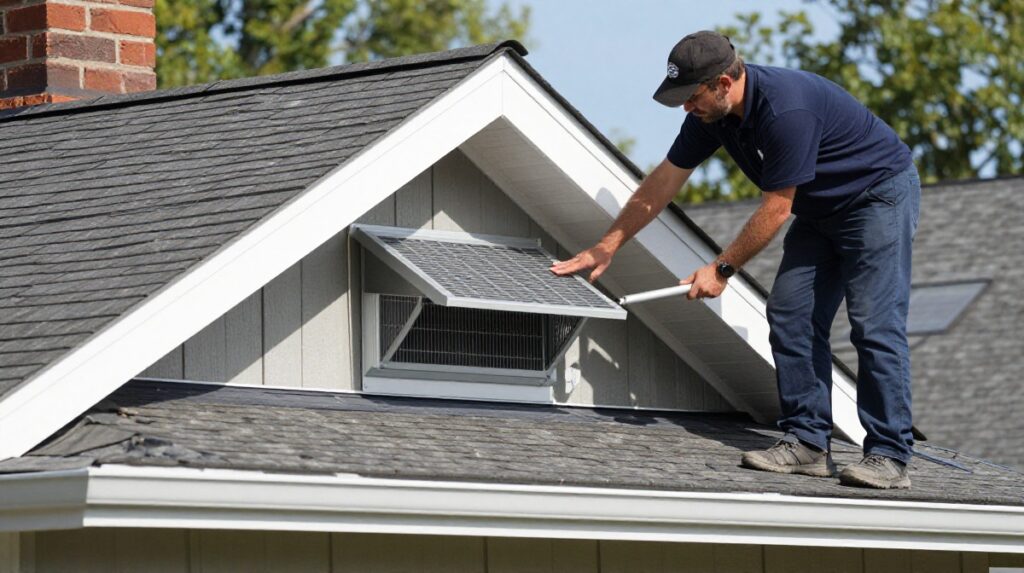
Ventilation. Air moving from soffit to ridge keeps the deck close to outdoor temperature. The part that usually fails is intake, blocked by insulation packed against the soffit. See the attic ventilation calculation.
And separately, ice barrier membrane at the eaves means that when a dam does form, the water backing up behind it does not reach the deck. That is a re-roofing item rather than a winter one. See the 24-inch rule.
The season to do this in
Now, roughly. The National Weather Service Detroit office puts average first measurable snowfall around 16 November, and the first inch or more around 30 November. Attic work in October is straightforward. Attic work in January, with a wet ceiling downstairs, is not.
Roofing in Clarkston
Clarkston and Independence Township sit in northern Oakland County with hills, lakes and heavy tree cover, which means more snow retention on roofs and more shaded slopes that never quite clear. Ice dams are a recurring rather than occasional problem here, which makes the attic side of the work more valuable than anywhere else we work.
See roofing in Clarkston, or everything we handle in Clarkston.
Common questions
What is the safest way to remove an ice dam?
Low-pressure steam, done by someone equipped for it. It melts the ice without striking or scouring the shingles.
Can I break up an ice dam myself?
Chipping at ice on a cold roof breaks shingles. A roof rake used from the ground to remove snow before a dam forms is the safe homeowner option.
Do salt pucks work on ice dams?
They can open a local channel. They also corrode metal and damage planting below, and they do not address the cause.
Is ice dam damage covered by insurance?
It depends on your policy and on whether the damage is treated as sudden. Document everything with dates and report it promptly.
Sort the attic before the snow
If your house forms ice dams every winter, the answer is inside rather than on the roof. We will look at insulation, air sealing and the soffit intake path and tell you what is actually driving it.
Book a free inspection, or read about residential roofing across Metro Detroit.
Sources: NOAA 1991-2020 U.S. Climate Normals, Detroit Metro Airport; National Weather Service Detroit/Pontiac climate records.