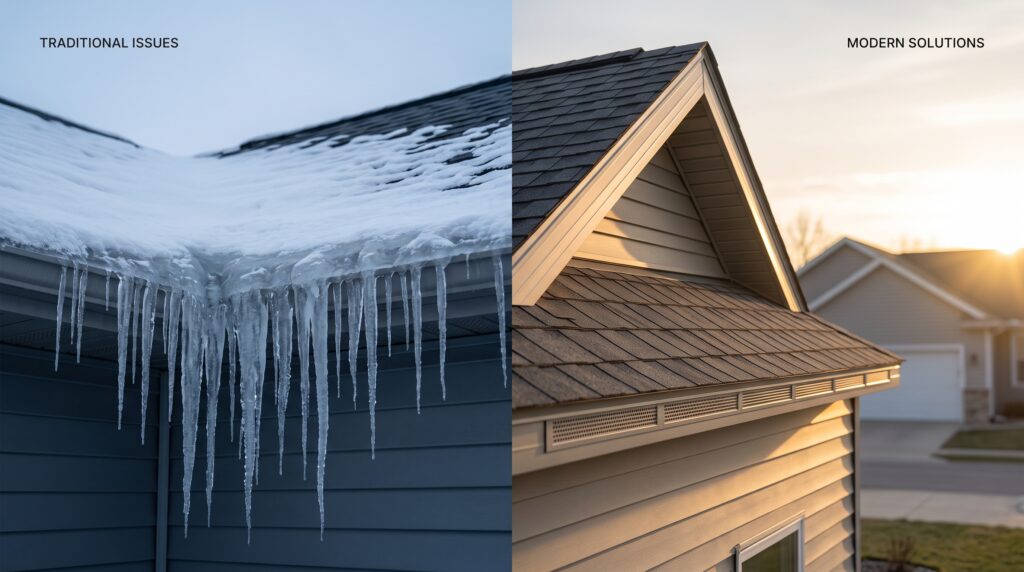
Roofline first
Valleys, drip edge, roof pitch and shingle overhang affect how water enters the gutter. If the roof sends water too fast into one spot, the ground-level problem may start above the gutter.
View roofing
Exterior Water Management for Michigan Homes
Water beside the foundation is usually the final symptom, not the beginning of the problem. 3G Home Exteriors traces the water path from roof valleys, gutter runs and downspouts to the discharge point, then recommends a practical fix that helps move runoff away from the home instead of letting it soak the same area after every Michigan storm.
Drainage
3G Home Exteriors helps Michigan homeowners solve exterior water problems by looking at the full path water takes around the home: roof runoff, gutter pitch, downspout capacity, extensions, discharge direction, landscaping, walkways, driveways and low spots near the foundation. The right solution may be a simple downspout correction, a better discharge route, gutter improvements, leaf protection, or a larger water-management plan.
Short, missing or poorly aimed downspouts can release roof water beside the same wall every storm. We review where the water lands and how to move it farther from the structure.
Overflow is not always a cleaning issue. Bad pitch, undersized runs, roof valley volume, loose hangers and too few downspouts can all push water over the edge.
Pooling near the home can lead to soft soil, splashback, staining, basement moisture concerns and repeated exterior maintenance. The fix starts by getting roof water away.
If old gutters are leaking, sagging or too small for the roofline, extensions alone may not solve the issue. The water-control system has to work together.
Whole water path review
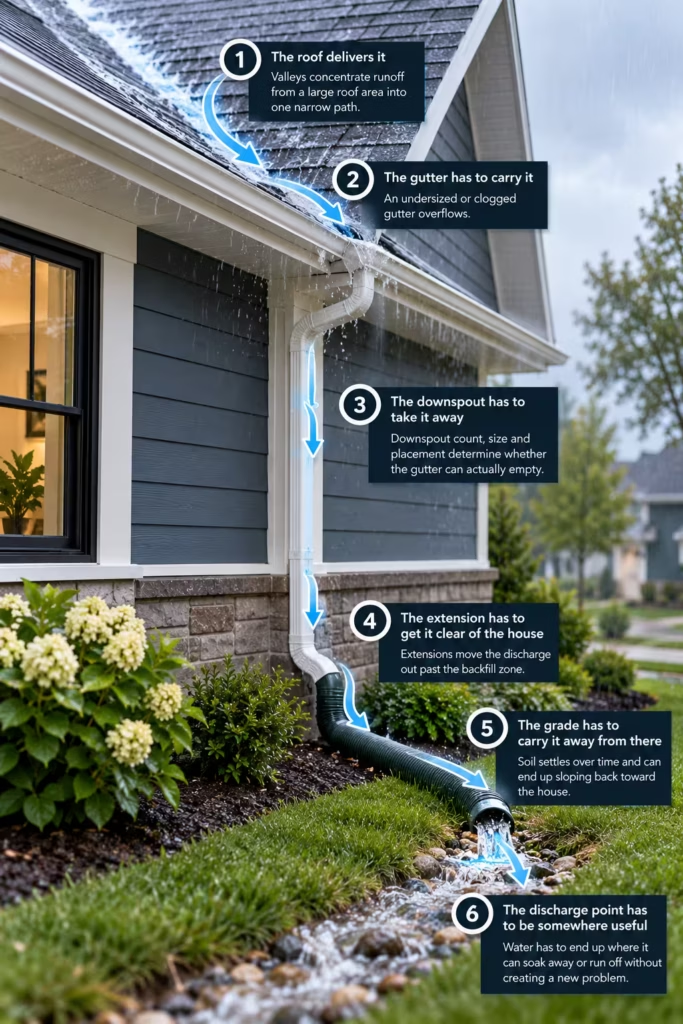
The wet area a homeowner sees is often only the last stop. Water may be leaving a roof valley too fast, skipping a gutter, backing up behind debris, dropping from a short downspout or landing on soil that slopes back toward the home. 3G looks at what happens before the puddle forms, then builds the recommendation around the simplest correction that makes sense for the house.
Valleys, drip edge, roof pitch and shingle overhang affect how water enters the gutter. If the roof sends water too fast into one spot, the ground-level problem may start above the gutter.
View roofingSagging sections, loose hangers, old seams, clogs and poor pitch can create overflow that looks like a yard drainage issue.
View guttersA gutter only works if the outlets and downspouts can carry the water away fast enough. Some homes need more capacity, better placement or cleaner discharge routes.
Request estimateThe end of the downspout matters. Water should not be released where it can run back toward a basement wall, porch, driveway, walkway, landscaping bed or neighboring problem area.
Get drainage helpBefore and after
Strong drainage proof is simple: before the work, water is spilling, pooling, washing out landscaping or landing too close to the home. After the work, gutters, downspouts and discharge points should make it easier for roof runoff to move away from the structure.


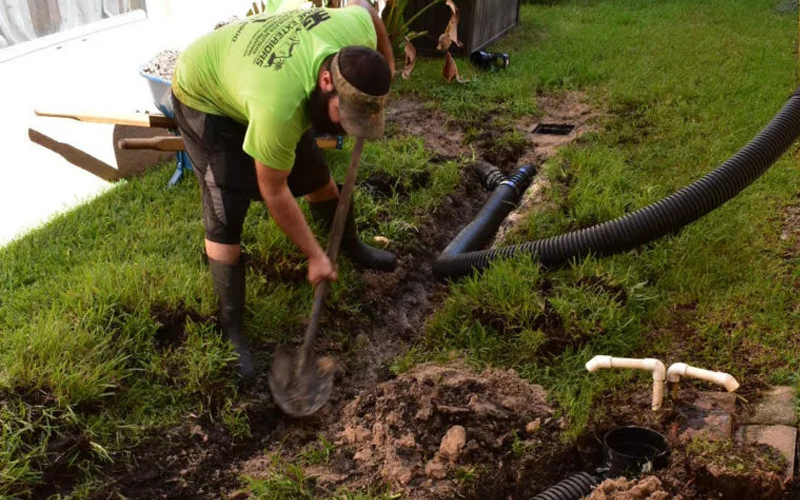
A downspout that used to soak the same foundation area is extended or redirected so roof water is released farther from the home and away from high-traffic areas.


A recurring overflow area is reviewed for gutter pitch, debris, roof valley volume, fascia condition and downspout capacity so the system can carry water instead of dumping it over the edge.
Project details
A drainage page should not read like a generic handyman checklist. The real story is how water behaves around the house: what creates the runoff, what catches it, what carries it, where it lands and what exterior materials can be damaged when that path breaks down.

Where the water leaves the downspout matters as much as the downspout itself. The discharge point should move runoff away without sending it back toward the house.

Overflow marks, sagging runs and loose hangers can show why water is spilling beside siding, fascia, mulch beds or foundation soil.

Fast roof valleys can overload one gutter section during heavy rain, especially when the outlet is small or the downspout route is too short.

Leaves, pine needles and roof debris can turn a normal rain into overflow. If clogs are part of the issue, leaf protection may belong in the drainage conversation.

When surface extensions are not practical, a buried drain route can carry downspout water farther from the foundation while keeping the yard and walkway cleaner.

Small grading issues can send water back toward the house. The soil, mulch edge, walkway and discharge area should work together so runoff keeps moving away.
Our process
Drainage work should start with observation, not guessing. The process is built around what the homeowner sees, what the exterior system is doing and which correction gives the best long-term value.
Tell us where water collects, when it happens, and which downspout, gutter run, roof valley or exterior wall seems involved. Photos after rain are especially helpful.
We review the roof edge, gutter pitch, downspout count, discharge direction, debris load, fascia condition and visible signs of overflow or splashback.
Pooling soil may be the symptom, while the cause could be a clogged gutter, a valley dumping too much water, an undersized downspout or a discharge point aimed the wrong way.
The fix may be a simple downspout route, or it may involve gutter replacement, added outlets, leaf protection, fascia repair or a larger exterior water-management package.
The goal is a cleaner, more reliable water path that moves runoff away from the home and reduces repeat issues around the foundation, siding, walkways and landscaping.
Project proof
On Michigan homes, drainage is usually connected to gutters, roof valleys, downspouts, fascia, siding and debris control. These examples explain the kind of thinking behind a useful water-management recommendation.

When water lands beside the same foundation wall after every storm, the first improvement is often a better discharge route. The goal is to release roof water farther from the home and reduce repeat soaking in one problem area.
Request drainage estimate
If the gutter system cannot carry the roof water, extensions alone will not solve the issue. Older or undersized gutters may need replacement, better pitch and more intentional downspout placement.
View gutters
When clogs cause overflow, water spills where it should not. Leaf protection can help keep the path open so gutters and downspouts can do their job through seasonal debris.
View leaf protectionCustomer proof
Homeowners should not be left guessing why water is collecting around the house. A strong estimate explains the cause, the path water is taking and the practical options for moving that water away from the home.
“Good communication, quick response and accurate gutter work are exactly what homeowners need when water control is the issue.”
Ashley Tyler · Google review summary“Fair pricing, fast response and exterior work the team stands behind make 3G a practical choice for connected gutter and siding issues.”
Ryan Talbot · Google review summary“Clear scheduling, strong communication and quality exterior work help homeowners feel confident from the first estimate to cleanup.”
Donald White · Google review summaryService areas
3G Home Exteriors is based in Fraser, Michigan and helps nearby homeowners improve gutter drainage, downspout discharge and exterior water control throughout Metro Detroit.
FAQ
Water near the foundation often starts at the roofline. The cause may be a short downspout, clogged gutter, poor gutter pitch, roof valley overflow, undersized downspout, discharge pointed toward the home or a low area that sends water back to the wall.
Yes. Gutters are one of the most common sources of exterior drainage issues. If they overflow, sag, leak, clog or do not have enough downspout capacity, roof water can spill beside the home and soak areas that should stay dry.
It depends on the condition and capacity of the existing system. If the gutters are straight, clean and sized well, downspout rerouting or extensions may help. If the gutters are old, sagging, leaking or overflowing during heavy rain, new seamless gutters and better downspout planning may be the smarter fix.
Downspouts should release water away from the foundation and away from areas where it can run back toward the home. The best discharge point depends on the yard slope, walkways, driveway, landscaping, neighboring property lines and where water naturally travels after rain.
Leaf protection can help when clogs are causing overflow. It will not fix every drainage problem, but for homes with trees, pine needles, seed pods or repeated debris buildup, guards can help keep water moving through the gutter and into the downspouts.
Heavy rain exposes capacity problems. A gutter may work during light rain but overflow when water comes fast from a large roof area or valley. Common causes include undersized gutters, too few downspouts, bad pitch, clogged outlets or water moving too quickly off the roof.
Yes. Repeated overflow and splashback can stain siding, soften trim, keep fascia wet and create maintenance issues around soffits, windows, doors and landscaping. Good drainage planning protects the full exterior, not only the soil around the home.
No. Many exterior water problems can be improved above ground by correcting gutters, downspouts, extensions, outlets, leaf protection or discharge direction. Some properties may need larger drainage work, but the roof-water path should be reviewed first.
Yes. 3G Home Exteriors is based in Fraser and helps homeowners across Macomb County, Oakland County and Metro Detroit with gutter drainage, downspout routing and exterior water-management improvements.
Use the estimate form or call 3G Home Exteriors at (586) 533-8343. Tell the team where the water collects, when it happens, which gutter or downspout is involved and send photos if you have them. That helps the team recommend the right next step.
Get started
Tell 3G Home Exteriors what you are seeing: water beside the foundation, overflow at a gutter corner, a short downspout, washout in the landscaping, splashback on siding or water freezing across a walkway. We will help review the likely source and recommend a practical path for gutter drainage, downspout routing, extensions, leaf protection or related exterior water-control work.