














Siding in Macomb Township, MI
Macomb Township is the newest of the places we work. Most of its housing went up from the late 1990s onwards, which means the siding here is not usually failing from old age. It is failing from how it was installed, or it is simply the wrong panel on a house the owner now wants to look different.
That changes the conversation completely. On a 1960s house we are talking about what is behind the wall. On a Macomb Township house the sheathing and the wrap are usually fine, and the question is whether the detailing was done properly and what you want the house to look like for the next twenty years.
Siding work on newer Macomb County homes
Completed 3G jobs. At the estimate we can show you work on a comparable subdivision elevation.
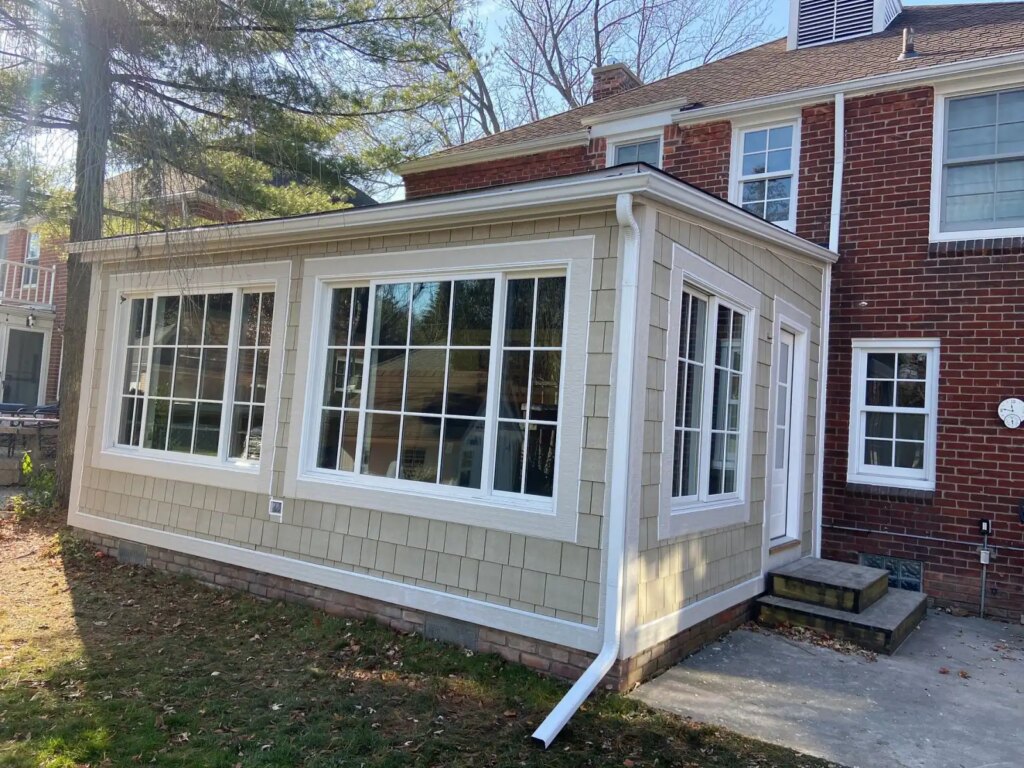
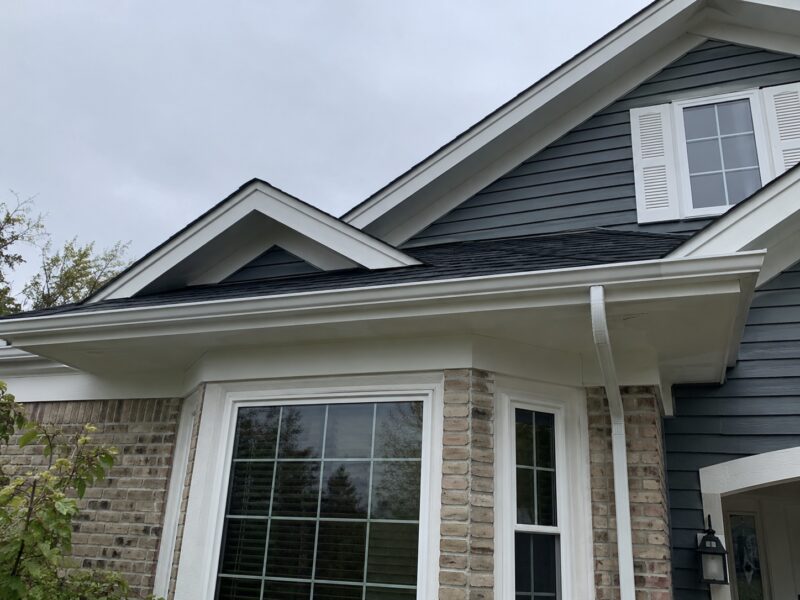
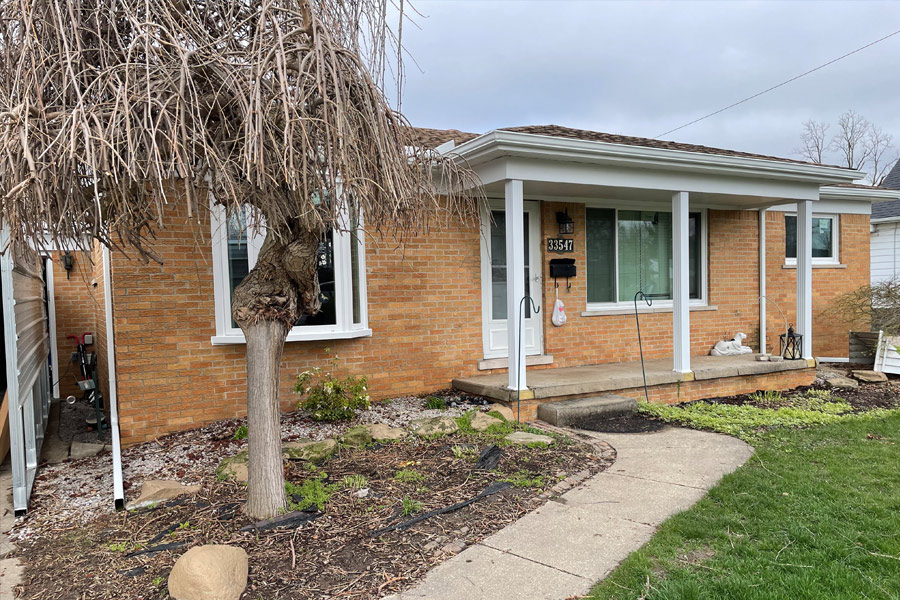
What we find on builder-grade installs
Production building is fast building. These are the five shortcuts we most often find when we take a panel off a house of this age here.
- House wrap lapped the wrong way at openings. The wrap is there, but it was cut and taped so that water running down it is directed into the opening rather than over it. This is the single most common defect we find.
- No flashing at the window head. Caulk was used instead. Caulk is a maintenance item, not a flashing detail, and it has a life of a few years.
- Nails driven home. Vinyl has to be able to move with temperature. Panels pinned tight buckle in summer and crack in winter, and the wave you can see along the wall in August is the symptom.
- J-channel used where a proper transition was needed. Particularly where siding meets a deck ledger, a bump-out or the brick front.
- Missing kick-out flashing. Where a roof edge runs into a wall, there has to be a piece that kicks water out into the gutter. Where it is missing, water goes straight down inside the wall, and you find out years later.
Upgrading rather than replacing like for like
If your siding is twenty years old and structurally fine, putting the same panel back on is a fair option and we will price it. But a lot of Macomb Township owners are re-siding because they want the house to stop looking like every third house in the subdivision, not because the wall failed.
That usually means a heavier vinyl profile with better trim, or a change of material on the front elevation and the gables. Fiber cement gives a deeper shadow line and holds a darker colour without the fade risk that dark vinyl carries. Our vinyl siding and trim page covers the vinyl side.
We will also tell you when your existing siding has ten good years left. Selling a re-side to someone who does not need one is a short-term way to run a business, and we are still in the same township you are.
Spot repairs on a house that is otherwise fine
Because this housing stock is relatively young, repair is often the honest answer in Macomb Township. A cracked panel, a section damaged by a ladder or a trimmer, or one elevation hit by hail does not mean the house needs re-siding.
What makes a spot repair work:
- The profile is still in production. Many builder panels from the last twenty years are, which means a genuine match rather than a close one.
- The wall has not faded much. On a north or east elevation a repair is usually invisible. On a south wall after fifteen summers it will not be.
- The damage is local. If panels are cracking in several places along a wall, that is a fastening or expansion problem and patching it only moves it along.
- Access is straightforward. A single-storey repair is a short visit. If staging is needed for one panel, it is worth checking whether the whole elevation is due.
Deck ledgers, hose bibs and everything bolted through the wall
Newer houses here have more things attached to the wall than older ones: deck ledgers, gas lines, electrical for hot tubs, satellite mounts, exterior outlets. Each one is a hole through the siding and through the wrap behind it.
A deck ledger is the one that matters most. It is a structural connection bolted through the siding into the rim joist, and if it was not flashed properly the water goes straight to the framing. We look at it on every re-side, and where it is wrong we say so even though it is not, strictly, siding work.
Everything else gets the same treatment on the way back: proper mounting blocks rather than panels cut around a fitting, and sealed penetrations rather than a squeeze of caulk.
What else we look at on a newer home
On a house this age the failures cluster at the connections rather than in the middle of a wall:
- Gutters in Macomb Township — most of these houses are still on the original builder-grade system.
- Roofing in Macomb Township — the first replacement, usually on a sound deck.
- Home additions — where new framing meets the existing wall is the joint we care about most.
- Drainage — newer subdivisions are graded to a plan that does not always survive the landscaping.
Siding questions from Macomb Township homeowners
My siding is only eighteen years old. Why would I replace it?
Often you should not, and we will tell you that. The cases where it makes sense are a panel that is failing across several walls, damage that cannot be matched, or a deliberate decision to change how the house looks.
My siding looks wavy in the summer. Is that a defect?
It usually means the panels were nailed too tightly and cannot expand. It is an installation fault rather than a material fault, and it does not fix itself. Whether it is worth re-hanging that wall depends on how bad it is.
Can you match my existing panel for a repair?
Often yes, on a house of this age. We will check the profile and the colour before we promise it, and if the match will be obvious we would rather tell you up front than hand you a patched wall.
We are adding a deck. Should the siding happen first?
If both are planned, siding first is easier and the ledger gets flashed into a new wall properly. If the deck is already on, we work around it and pay particular attention to the ledger detail.
Serving Macomb Township and nearby Shelby Township, Clinton Township, Chesterfield and Washington Township.


