













Siding in Harrison Township, MI
Harrison Township sits on Lake St. Clair, and that single fact changes almost everything about how siding behaves here. Wind comes off open water with nothing to break it, humidity stays higher for longer, and the canal and waterfront streets get weather that houses a few miles inland simply do not see.
We work across three counties, and the waterfront side of Harrison Township is the place where installation detail matters most. A panel that would sit quietly on a sheltered Fraser street will lift here if it was not fastened and locked correctly.
Siding work in and around Harrison Township
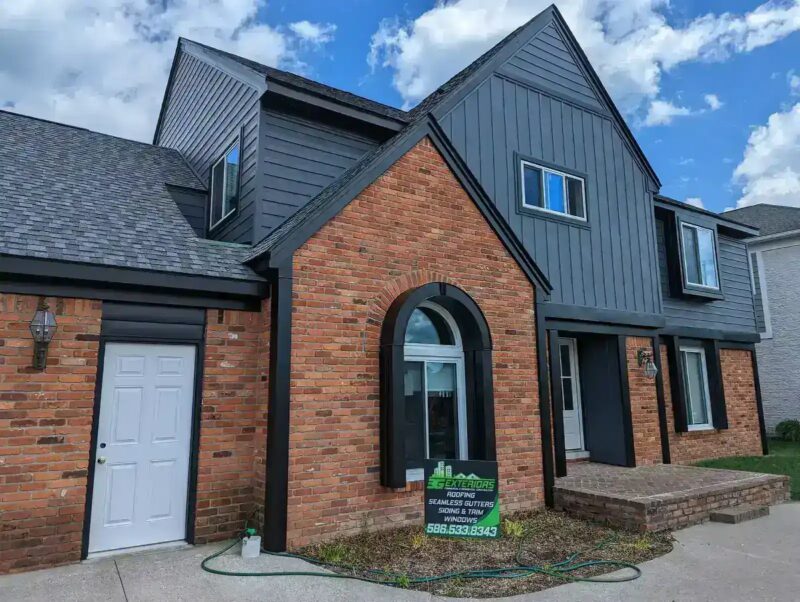
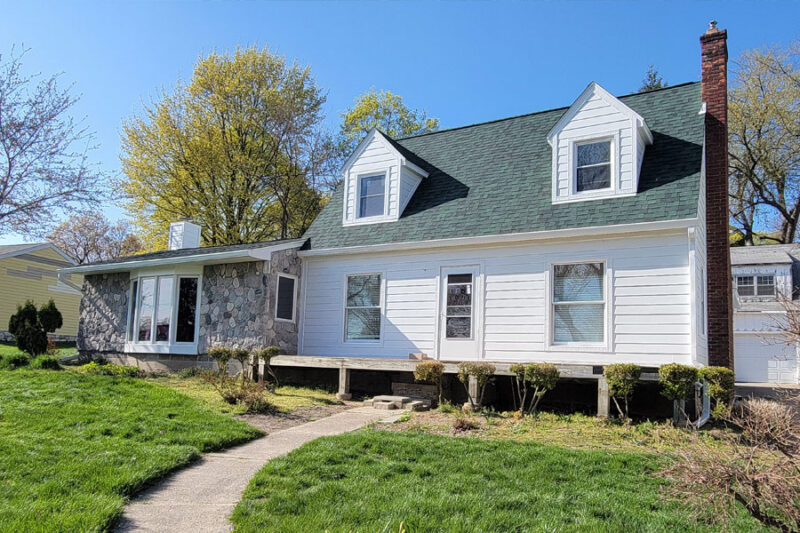
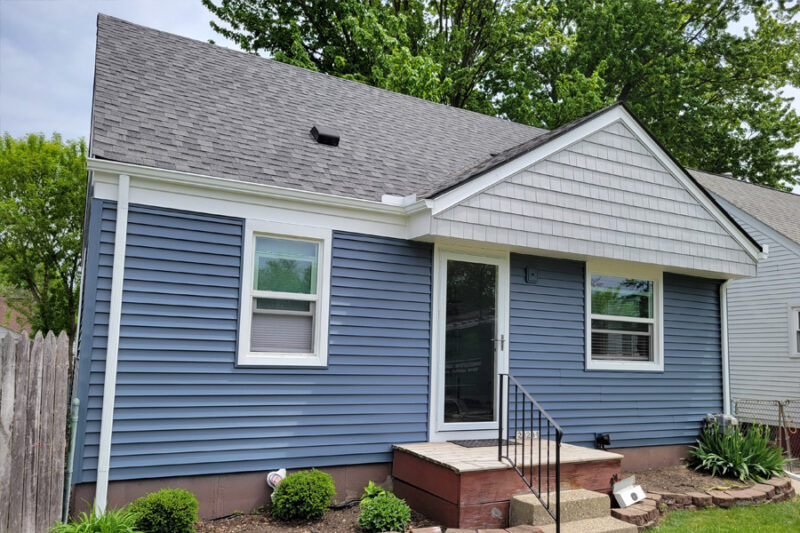
Completed 3G jobs from across Macomb and Oakland counties. At the estimate we can show you work on a comparably exposed elevation.
What wind off the lake actually does to a wall
Wind damage to siding is rarely dramatic. It is usually slow, and it starts in the same places.
- The windward gable end. The highest, most exposed part of the wall takes the most pressure and is the hardest to see from the ground. Panels start to unlock at the top and work down.
- Wind-driven rain, not gravity. Rain that arrives horizontally gets behind a panel through the bottom lock, which gravity alone never would. That is why the weather barrier behind the siding does the real work on this side of the township.
- Fasteners. Panels need to be nailed at the correct spacing, centred in the slot, and not driven tight. On exposed elevations the spacing matters more than on a sheltered wall, and it is the cheapest thing in the job to get right.
- Trim and corner posts. A corner post that is not fully engaged is the point where wind gets its fingers in. Corners fail before fields do.
- Soffit. Vented soffit on an exposed eave is under uplift every time the wind blows. Soffit blown out of its channel is one of the most common calls we get after a storm here.
What holds up near the water
Vinyl performs well here provided it is the right weight and it is hung properly. A heavier panel with a deeper lock resists uplift far better than thin builder-grade stock, and the difference in material cost is small against the labour. The profiles are on our vinyl siding and trim page.
Fiber cement is a genuinely different proposition on an exposed elevation: it is fastened through the board rather than hung in a lock, so uplift is not the same concern. It costs more and it is heavier to install, and on a waterfront elevation that is often money well spent.
Aluminium trim and coil hold up fine in this air. What does not hold up is any fastener specification that was chosen for a sheltered inland wall and used here because it was on the truck.
Houses on the canals and the waterfront
Waterfront and canal properties in Harrison Township bring their own practical problems, and they are worth raising before a quote rather than on the first morning of the job.
What we look at:
- Access along the water side. Seawalls, docks and narrow side yards decide whether we can stage at all, and that is a bigger factor here than the wall area.
- The lower courses. Splash, spray and higher ground moisture all work on the bottom of the wall. It is the first place to look for staining and soft trim.
- Crawl space and skirting. Where a house sits low, the transition from siding to foundation needs a proper starter and a clear drainage path rather than panel run down to the dirt.
- Humidity behind the wall. Ventilation at the soffit and ridge is part of the same system. A wall and a roof that cannot breathe hold moisture here longer than they would inland.
After a storm, what to check before you call anyone
Storm chasers work this shoreline. After a serious blow there will be trucks on the street the next morning, and some of them will be honest and some of them will not.
You can check the basics yourself from the ground: look along each wall at a low angle for panels that are no longer sitting flat, look at the gable ends with binoculars, and look at whether any soffit has dropped out of its channel. Loose is not the same as missing, and both are repairable.
If the roof took the same hit, our storm damage page explains how we document it. We are a local company with a shop in Fraser; we are not here for one season.
The rest of the exterior on an exposed site
On the water side of the township the whole envelope works harder:
- Gutters in Harrison Township — where wind drives rain into places an inland gutter never sees.
- Roofing in Harrison Township — why the windward slope ages first.
- Storm damage — what is worth claiming and what is not.
- Drainage — for low-lying lots where the water table is close to the surface.
Siding questions from Harrison Township homeowners
Does being near the water mean I should avoid vinyl?
No. It means the weight of the panel and the way it is fastened matter more than they would inland. Properly hung, good vinyl does well here. Badly hung, anything does badly here.
Wind took some panels off my gable. Can that be repaired?
Usually yes, if the profile can be matched and the rest of the wall is sound. We would also want to look at why it came off, because panels that lift once on a gable end tend to do it again if the fastening was the problem.
My soffit blew down. Is that part of a siding job?
It is the same trade and the same crew. On an exposed eave we look at how the soffit is retained as well as replacing it, because putting the same detail back gives you the same result next time.
Is salt or moisture from the lake a problem for aluminium trim?
Less than people expect. Lake St. Clair is fresh water, and the practical issues here are wind and humidity rather than salt corrosion. Ventilation and fastening are what we pay attention to.
Serving Harrison Township and nearby Mount Clemens, Clinton Township, Chesterfield and St. Clair Shores.


