














Siding in Clinton Township, MI
Clinton Township is one of the largest townships in Michigan by population, and it did not grow all at once. You can drive from post-war bungalows near Cass Avenue to 1970s colonials off Garfield to subdivisions finished in the last twenty years, and the siding question is different in each of them.
That is why a siding quote here should never be a per-square-foot number off a map. A 1958 house with wood sheathing and no wrap and a 2004 house with OSB and a failed builder-grade panel need different work, even if the wall area is identical.
Siding work across Macomb County
Completed 3G jobs. At the estimate we can show you work on a house closer to the era of your own.
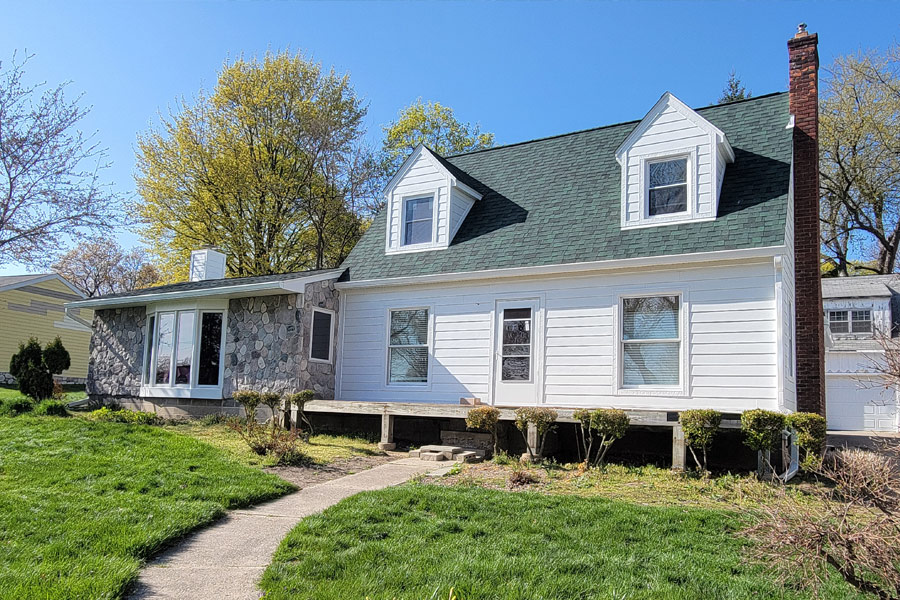
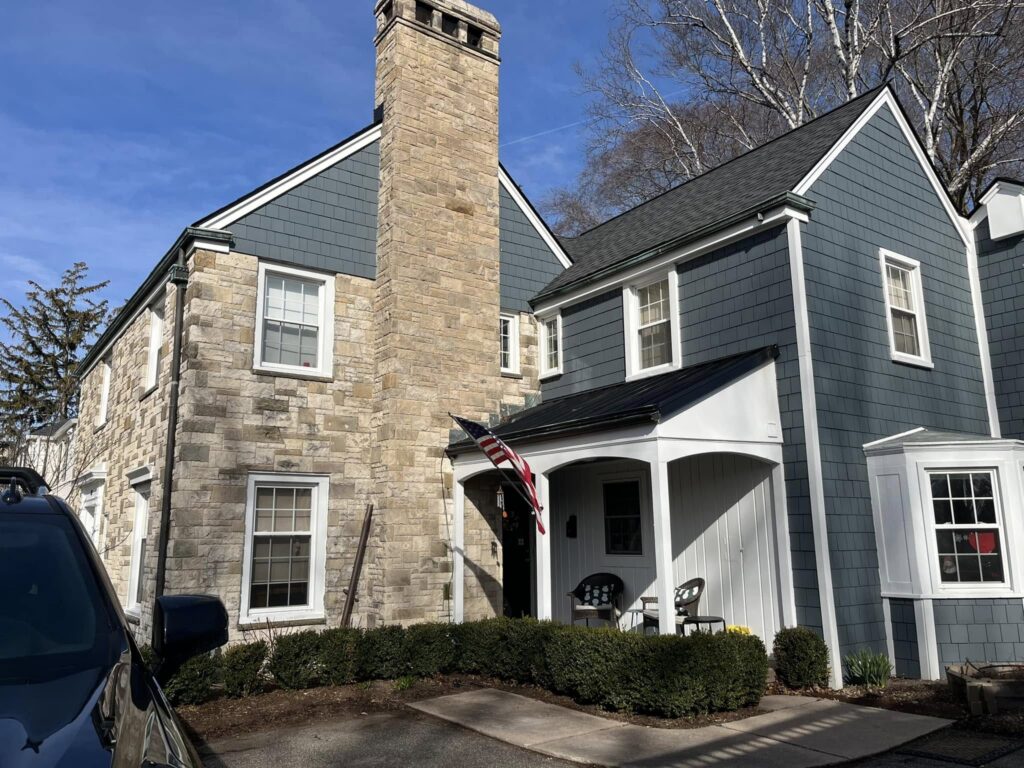
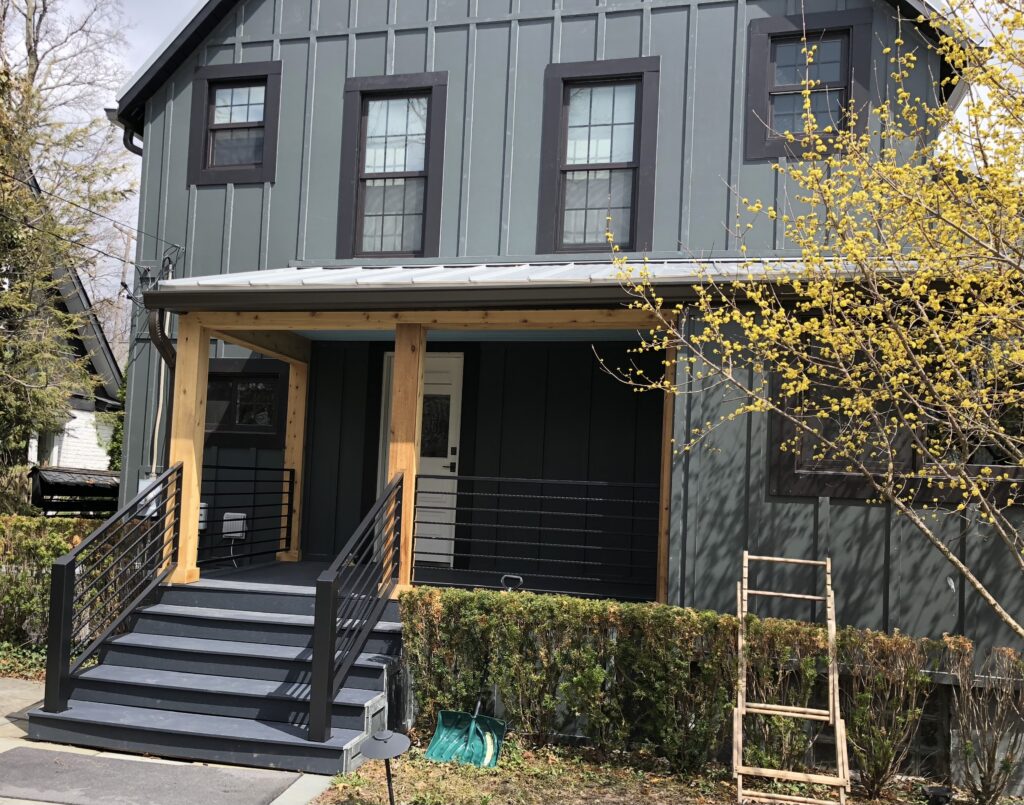
Three housing eras, three sets of problems
Before we price anything in Clinton Township we work out which of these we are standing in front of, because it changes the whole scope.
- Late 1940s to early 1960s. Board or plank sheathing, often no weather barrier, frequently one or two layers of siding already on the wall. Expect carpentry and expect to find the original wood underneath.
- Mid 1960s to late 1970s. The aluminium era. Panels are usually sound structurally but chalked and dented, and the trim coil around the openings was rarely flashed. Sheathing is generally fine; the openings are not.
- 1980s and 1990s. First-generation vinyl, thin gauge, badly faded on the south and west walls. Often installed over the aluminium rather than instead of it, which means two layers to strip.
- 2000 onwards. Builder-grade vinyl over OSB with house wrap. The wrap is usually there but often poorly lapped at the openings. Failures here are about detailing, not about the wall.
- Any era with an addition. The join between the original house and the addition is where we look first. Different framing depths and different sheathing meet there, and that is where the water gets in.
What to put back on
On the older Clinton Township stock, an insulated vinyl panel does two jobs at once: it covers a wall that has no insulation in the cavity worth speaking of, and it lies flatter over uneven old sheathing than a thin panel does. The profiles and trim we use are on the vinyl siding and trim page.
On the newer colonials, where the shell is sound, the decision is more about appearance and longevity. Fiber cement holds a colour longer and gives a heavier shadow line, and it suits a larger two-storey elevation better than vinyl does.
There is no single right answer for a township this varied. We will tell you which way we would go on your house and why, and we will tell you when the cheaper option is the right one.
Matching new siding to the age of the house
A siding job can quietly make a house look wrong. A wide-exposure panel on a small 1950s ranch reads as too big for the elevation; a narrow traditional lap on a 2005 colonial reads as fussy. Getting this right costs nothing extra and is the difference between a house that looks re-sided and a house that just looks right.
Three things we pay attention to on Clinton Township elevations:
- Exposure width. The visible height of each course. Smaller, older houses generally want a narrower exposure; larger modern elevations can carry a wider one without looking flat.
- Trim proportion. Corner boards and window trim that are too thin make a house look like it is wearing a plastic sleeve. On older houses we size the trim to what the original wood trim was.
- Where the material changes. If the front is brick or stone, the transition line matters. It should land on a logical break in the elevation, not halfway up a window.
Flat lots and where the water sits
Most of Clinton Township is flat. Water that comes off the roof does not run away on its own; it sits where it lands. On a flat lot the bottom of the wall, the splash zone and the grade at the foundation are all one connected problem, and new siding on its own does not solve it.
When we scope a re-side here we look at where the downspouts discharge before we look at panel colour. If the water is going out three feet from the wall onto flat ground, it is coming back at the siding and at the basement. The gutter work we do in Clinton Township and our drainage page both deal with that end of it.
What we check alongside the siding
The wall meets the roof, the windows and the ground. Those joints are where jobs fail:
- Gutters in Clinton Township — the gutter comes off to do the fascia, so it is the natural moment to replace it.
- Roofing in Clinton Township — the same three housing eras, read from the roof rather than the wall.
- Window replacement — flashing a new window into a new wall is a single operation; doing it later is two.
- Masonry — for the brick fronts common on the 1970s colonials here.
Siding questions from Clinton Township homeowners
My house already has vinyl over the original aluminium. Does that cost more to remove?
Yes, a little, because it is two strip-outs rather than one. It is also the reason we want it off: two layers means nobody has looked at that sheathing since the house was built.
Can you side just one elevation?
We can, and sometimes it is the right call after storm damage. Be aware that a new panel will never colour-match a wall that has been in the sun for fifteen years, so on an elevation that faces the street we would usually advise against it.
We have an addition that was sided differently. Can it be made to match?
That is one of the more common jobs here. The addition and the original house get the same material and the same trim, and the join between the two framing depths gets properly flashed rather than caulked over.
Does insulated siding actually make a difference on an older house?
On a 1950s or 1960s wall with little or no cavity insulation, it is a measurable improvement, and it also stiffens the panel so it lies flatter over old sheathing. On a modern wall that is already insulated, the case is weaker and we will say so.
Serving Clinton Township and nearby Fraser, Mount Clemens, Sterling Heights and Harrison Township.


