
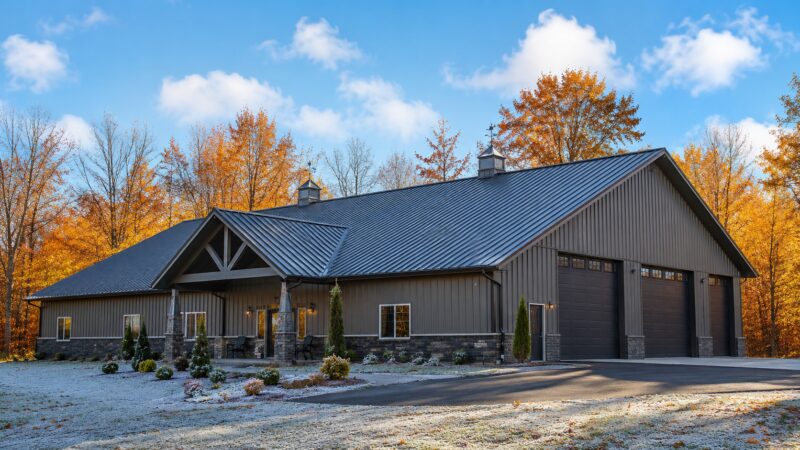
- Metal roofing—specifically 26- or 29-gauge galvanized steel—is the top choice for Michigan pole barns, outperforming asphalt shingles in snow, ice, and wind.
- Standing seam metal roofing lasts 40–60 years with minimal maintenance, while corrugated (exposed fastener) panels last 25–40 years but require re-fastening every 10–15 years.
- Galvalume or Kynar 500-coated panels paired with a 6:12 pitch and proper ice-and-water shield underlayment offer the best protection against Michigan's freeze-thaw cycles and heavy snow loads.
If you own a pole barn in Michigan, you already know the state’s weather doesn’t take it easy on any structure. From 40–45 inches of annual snowfall across southeast Michigan to 60–80 freeze-thaw cycles each year, your pole barn’s roof takes a beating. The National Weather Service confirms that the Detroit metro area alone experiences around 60 temperature swings that cross the freezing point annually—and that’s precisely why metal roofing has become the go-to solution for Michigan pole barn owners.
According to the Michigan Building Code, most of southeast Michigan falls in a 20 psf (pounds per square foot) snow load zone. Add in winter humidity levels that regularly hit 70–80%, and you’ve got a recipe for ice dams, moisture damage, and premature roof failure if you choose the wrong materials. At 3G Home Exteriors, we’ve helped homeowners across Metro Detroit—from Troy and Warren to Sterling Heights and Novi—choose and install the right pole barn roofing system. This guide will walk you through everything you need to know, including material comparisons, costs, and local considerations.
Standing Seam vs. Corrugated Metal Roofing: Which Is Better for Michigan Pole Barns?
For most Michigan pole barn owners, the decision comes down to two metal roofing systems: standing seam (with hidden fasteners) and corrugated (with exposed fasteners). Both are steel-based and perform well in snow, rain, and wind, but the differences in lifespan, maintenance, and cost are significant—especially in Michigan’s challenging climate.
Let’s break down the key differences side by side:
| Feature | Standing Seam (24–26 gauge) | Corrugated (26–29 gauge) |
|---|---|---|
| Typical Lifespan | 40–60 years | 25–40 years |
| Snow/Ice Performance | Excellent—continuous seam sheds snow cleanly | Good—requires minimum 4:12 pitch for snow shedding |
| Wind Uplift Rating | 120+ mph (ideal for MI spring storms) | 90–110 mph |
| Exposed Fasteners | No—fasteners are hidden | Yes—prone to loosening over time |
| Maintenance Needs | Minimal mechanical maintenance | Re-fastening or resealing every 10–15 years |
| Best Use Case | Workshops, hobby barns, permanent structures | Budget agricultural storage, equipment sheds |
The most critical factor for Metro Detroit pole barn owners is fastener exposure. Michigan’s 60–80 annual temperature swings cause metal panels to expand and contract constantly. Over time, this movement loosens exposed fasteners on corrugated panels, creating gaps where water can intrude. Standing seam systems eliminate this issue entirely, making them a far more reliable long-term investment.
If you’re considering a roof replacement for an existing pole barn, it’s also worth evaluating the condition of your current roof structure. Learn more about signs you need a new roof in Michigan to determine whether repair or full replacement is the right path.
Which Roofing Materials Hold Up Best Against Michigan’s Snow, Ice, and Wind?
Michigan’s winters are legendary for a reason. Southeast Michigan gets an average of 42–45 inches of snow annually, and the freeze-thaw cycle—where temperatures fluctuate above and below freezing—is one of the most destructive forces for roofing systems. The right metal roofing panel, coating, and underlayment are essential for long-term performance.
Metal Panel Coatings: What You Need to Know
Not all steel panels are created equal. The coating on your metal panels determines how well they resist rust, UV damage, and corrosion. Here’s how the most common coatings compare for Michigan conditions:
| Coating Type | Composition | Typical Corrosion/Finish Warranty | Best For Michigan? |
|---|---|---|---|
| Galvanized (G90) | Zinc coating over steel | 20–30 years | Budget-conscious agricultural builds |
| Galvalume | Aluminum-zinc alloy over steel | 30–40 years | Highly recommended—great corrosion resistance |
| Kynar 500 / PVDF Paint | Premium fluoropolymer finish | 40+ years | Best—maximum durability and color retention |
For pole barns in the Detroit metro and Great Lakes moisture corridor, Galvalume or Kynar 500 finishes are strongly recommended. The added aluminum content in Galvalume and the fluoropolymer protection in Kynar 500 provide superior resistance against the prolonged moisture exposure common to this region. If your pole barn is located near any of the communities we serve—including St. Clair Shores, Macomb Township, or Chesterfield—the lake-effect moisture makes this upgrade even more valuable.
Roof Pitch and Underlayment Are Critical
Even the best metal panels won’t perform well if the roof pitch isn’t sufficient. For Michigan pole barns, a minimum 4:12 pitch is recommended, but a 6:12 pitch is preferred for maximum snow shedding. The steeper the pitch, the less snow accumulates, reducing the risk of ice dams and excessive weight stress.
Equally important is the ice-and-water shield underlayment. Michigan’s high winter humidity means moisture is constantly available to refreeze at roof edges when attic heat escapes. Self-adhering ice-and-water shield installed at the eaves—covering a minimum of 24–36 inches—is the strongest defense against ice dam damage. The Michigan Residential Code now requires this underlayment for new construction in most jurisdictions, making it a permit compliance requirement as well.
If you’ve noticed signs of a roof leak or ice dam damage in your pole barn, it’s worth having a professional inspection to assess the extent of the problem before proceeding with a new installation.
Pole Barn Roof Replacement Cost in Michigan (2026 Estimates)
Cost is always a major consideration when selecting a pole barn roofing system. For a standard 2,400-square-foot pole barn, here’s what you can expect to pay in the Detroit metro area. These are estimated installed costs, including both materials and Michigan labor rates. Keep in mind that prices can vary by 15–25% based on roof complexity, pitch steepness, tear-off requirements, and current steel pricing.
| Roofing System | Material Cost (per sq. ft.) | Installed Cost (per sq. ft.) | Est. Cost for 2,400 sq. ft. | Expected Lifespan |
|---|---|---|---|---|
| Asphalt Shingles (comparison) | $1.25–$2.50 | $3.00–$5.00 | $7,200–$12,000 | 20–30 years |
| 29-gauge Corrugated Steel | $1.50–$2.50 | $3.50–$5.50 | $8,400–$13,200 | 25–40 years |
| 26-gauge Standing Seam Steel | $3.00–$5.00 | $6.00–$10.00 | $14,400–$24,000 | 40–60 years |
| Galvalume Standing Seam | $3.50–$5.50 | $6.50–$10.50 | $15,600–$25,200 | 40–60 years |
Pro tip: While corrugated steel is more budget-friendly upfront, don’t forget the hidden maintenance cost. Exposed fasteners on corrugated panels typically need re-fastening or resealing every 10–15 years, adding $800–$1,200 to the total cost over time. Standing seam systems, by contrast, require minimal mechanical maintenance across their entire lifespan.
If upfront cost is a concern, 3G Home Exteriors offers flexible financing options to help you spread the investment over time. And if your existing roof has storm damage, our storm damage roof repair team can help you navigate the insurance claim process.
How to Choose the Right Pole Barn Roofing System for Your Use Case
The best roofing system for your pole barn ultimately depends on how you use the structure. Here’s a practical guide to matching the right materials to your specific needs:
1. Open Agricultural Storage or Equipment Shed
Best choice: 29-gauge corrugated steel with G90 galvanized coating
Recommended pitch: Minimum 4:12
Why: This is the most cost-effective option. The galvanized coating provides basic corrosion resistance, and the corrugated profile, combined with a 4:12 pitch, can handle Michigan’s snow loads reliably. Panels should carry a minimum 40-year panel warranty and be rated for at least 90 mph wind uplift to handle southeast Michigan’s spring and summer storms.
2. Livestock or Climate-Sensitive Agricultural Building
Best choice: 26-gauge Galvalume standing seam or corrugated with ventilation ridge cap
Recommended pitch: Minimum 6:12
Why: Livestock buildings need better ventilation and moisture control. The Galvalume coating offers superior corrosion resistance, while the ventilation ridge cap reduces condensation buildup inside. A tighter seam system (standing seam) also minimizes air leakage, helping maintain a more stable interior environment for animals or temperature-sensitive materials.
3. Workshop, Hobby Barn, or Residential-Adjacent Structure
Best choice: Standing seam with Kynar 500 PVDF painted finish
Recommended pitch: 6:12
Why: When your pole barn sits near your home, appearance matters. Standing seam with a PVDF finish offers a clean, modern look with superior color retention and UV resistance. It also carries the longest finish warranty of the three categories (40+ years), making it the best long-term investment for structures you’ll enjoy for decades.
Does Metal Roofing Actually Save Michigan Pole Barn Owners Money Over Time?
Yes—and the savings add up more than you might think. Let’s compare the 40-year total cost of ownership for a typical Michigan pole barn:
- Corrugated Steel: Approximately $11,000 installed. Around year 15, exposed fasteners need re-fastening or resealing at a cost of roughly $800–$1,200. Total 40-year cost: ~$12,000.
- Asphalt Shingles: Approximately $9,500 installed. However, most asphalt roofs on pole barns need a full replacement between years 20 and 25. That means a second installation at roughly $9,500. Total 40-year cost: ~$19,000.
- Standing Seam Metal: Approximately $18,000–$20,000 installed. Minimal maintenance required. Total 40-year cost: ~$19,000–$20,000.
While standing seam has a higher upfront cost, its lifespan equals or exceeds the cost of two asphalt shingle replacements—and you avoid the hassle and disruption of a mid-life roof replacement. Additionally, many Michigan insurers offer premium discounts of 5–15% on agricultural and accessory structures with metal roofing, thanks to their Class A fire rating and strong wind/hail performance.
There’s also an energy savings component. In conditioned pole barn spaces—workshops, hobby barns, climate-controlled storage—metal roofing with reflective coatings can cut heating and cooling costs by 10–25%. ENERGY STAR-rated steel panels achieve this through high solar reflectance values that reduce heat gain in summer and limit heat loss in winter.
When to Call a Professional Pole Barn Roofing Contractor
Installing or replacing a pole barn roof is not a DIY project—especially in Michigan, where snow loads, building codes, and permit requirements add complexity. Here are the signs that it’s time to call a professional from 3G Home Exteriors:
- Visible leaks or water stains on the ceiling or walls of your pole barn.
- Sagging roof deck or visible structural bowing under snow weight.
- Loose or missing fasteners on corrugated panels—a common issue after 10–15 years.
- Rust, corrosion, or peeling coating on metal panels, especially at the edges or fastener points.
- Ice dams forming along the eaves that cause water backup and interior leaks.
- Storm damage—missing panels, punctures, or denting from hail or fallen branches.
At 3G Home Exteriors, we’re a trusted Michigan home exterior contractor with experience in both residential roofing and pole barn structures. We serve the entire Metro Detroit area, including Troy, Warren, Sterling Heights, Novi, Rochester Hills, and all surrounding communities.
Final Thoughts: Protecting Your Michigan Pole Barn for the Long Haul
Choosing the right roofing material for your Michigan pole barn is one of the most important decisions you’ll make as a property owner. With the state’s heavy snow loads, frequent freeze-thaw cycles, and high humidity, metal roofing—particularly standing seam with a Galvalume or Kynar 500 coating—stands out as the best long-term investment. It offers superior durability, minimal maintenance, and excellent protection against Michigan’s harshest weather.
Whether you need a cost-effective solution for an agricultural storage shed or a premium system for a workshop or hobby barn, the team at 3G Home Exteriors is here to help. We understand the unique challenges of Michigan’s climate and can guide you through every step—from material selection and permitting to professional installation and final inspection.
Don’t wait until the next freeze-thaw cycle finds the weak spot in your roof. Protect your investment, your livestock, or your workshop with a pole barn roof built to last—right here in Metro Detroit.
Article FAQ
In most Michigan jurisdictions, yes—a single layer of metal can be installed over existing shingles, provided a professional inspection confirms the structural integrity of the deck underneath. However, many municipalities in Metro Detroit, including Troy and Warren, require a full tear-off if the deck shows any signs of moisture damage. Always work with a licensed Michigan contractor who knows local permit requirements.
Absolutely. Pole barns within the broader Great Lakes moisture corridor—including communities like St. Clair Shores, Macomb Township, and Chesterfield—experience higher humidity and lake-effect precipitation, which accelerates corrosion. For these locations, Galvalume or Kynar 500-coated panels are strongly recommended over standard galvanized, as they offer superior resistance to prolonged moisture exposure.
Proper ridge and soffit ventilation prevents warm interior air from escaping through the roof deck, which is a primary driver of ice dam formation during Detroit's frequent freeze-thaw cycles. On livestock or heated workshop pole barns, inadequate ventilation can also cause condensation to accumulate beneath metal panels, accelerating corrosion from the underside—regardless of the exterior coating rating.
Most municipalities in southeast Michigan require a building permit for roof replacement and new accessory structures. The Detroit Buildings, Safety Engineering, and Environmental Department (BSEED) is the local authority for Detroit, while other communities have their own permitting offices. A qualified Michigan contractor like 3G Home Exteriors will pull the necessary permits and verify zoning setbacks before work begins—saving you time and ensuring code compliance.
Keep reading
Related guides

Free Roof Inspection in Michigan: What Homeowners Need to Know
Your roof works harder than any other part of your home—especially in Michigan. Every year, your roof endures 40 to…
Best Roofing Materials for Michigan Weather: Pros, Cons & Costs
Quick Material Summary: Architectural asphalt shingles are usually the best all-around value for Michigan homeowners, while metal roofing offers excellent…
7 Warning Signs You Need a New Roof in Michigan | Homeowner Guide
Quick Roof Warning Summary: Missing shingles, repeated leaks, granule loss, sagging areas, storm damage, visible daylight in the attic, and…