
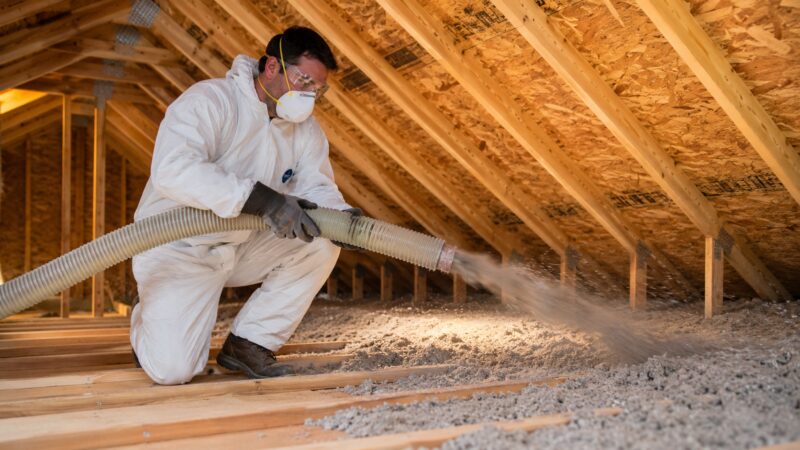
- Most Michigan homeowners pay $1.50–$4.00 per square foot for attic insulation, with total projects ranging from $1,500 to $4,500 depending on home size and material choice.
- Michigan code requires R-49 to R-60 attic insulation, and Detroit's pre-1950 homes often need air sealing, wiring clearance, and access work—adding $400–$1,000 to project costs.
- Blown-in cellulose offers the best value at $1.50–$2.50 per sq. ft., while spray foam costs $3.00–$7.00 per sq. ft. but provides superior air sealing for older homes.
- Federal tax credits (up to $1,200) and annual energy savings ($240–$480) mean most homeowners recover their investment within 4–8 years.
If you’re a Michigan homeowner, you’ve probably noticed your energy bills creeping up each winter. The culprit? Often, it’s an under-insulated attic. Detroit’s older housing stock—much of it built before 1950—frequently has insulation levels below R-19, well short of Michigan’s current building code requirement of R-49 to R-60.
According to the U.S. Department of Energy, homes with inadequate attic insulation can lose 25–35% of their heating energy through the ceiling alone. For a typical Metro Detroit home, that translates to $240 to $480 in wasted energy costs every year. At 3G Home Exteriors, we’ve helped homeowners across southeast Michigan—from Troy and Warren to Sterling Heights and Novi—upgrade their attic insulation for comfort, energy savings, and code compliance.
This guide covers everything you need to know about attic insulation costs in Michigan for 2026, including material comparisons, hidden cost factors, and how to calculate your ROI. Plus, we’ve created an interactive cost calculator to help you estimate your project budget instantly—scroll down to try it.
How Much Does Attic Insulation Cost Per Square Foot in Michigan?
The cost of attic insulation in Michigan varies significantly based on material type, installation complexity, and your home’s age. For a typical 1,200 to 1,500 square foot attic, here’s what you can expect to pay in the Metro Detroit area:
| Insulation Type | Installed Cost (per sq. ft.) | R-Value per Inch | Total Cost (1,200 sq. ft.) | Best For |
|---|---|---|---|---|
| Blown-In Cellulose | $1.50 – $2.50 | R-3.2 – R-3.8 | $1,800 – $3,000 | Whole-attic retrofits, older homes |
| Blown-In Fiberglass | $1.50 – $2.50 | R-2.2 – R-2.7 | $1,800 – $3,000 | Retrofit over existing batts, moisture-resistant |
| Fiberglass Batts | $1.00 – $2.00 | R-3.0 – R-3.8 | $1,200 – $2,400 | New construction, open joist bays |
| Spray Foam (Open Cell) | $3.00 – $5.00 | R-3.5 – R-3.7 | $3,600 – $6,000 | Air sealing, rim joists, odd geometry |
| Spray Foam (Closed Cell) | $5.00 – $7.00 | R-5.6 – R-8.0 | $6,000 – $8,400 | Maximum R-value per inch, moisture barrier |
Pro tip: For most Michigan homeowners targeting R-49 to R-60, blown-in cellulose offers the best value. It provides the most depth of coverage per dollar spent and works exceptionally well in older homes with irregular joist spacing.
Spray foam is rarely used for whole-attic fills—it’s overkill and expensive. Instead, smart homeowners use spray foam only for targeted air sealing at rim joists, attic hatches, and around wiring, then use blown-in cellulose for the bulk of the attic floor. This combination gives you the best of both worlds.
What Factors Drive Michigan Attic Insulation Costs Higher?
Several factors can push your attic insulation project from a $1,500 baseline to $4,500 or more. Here are the most common cost drivers in Metro Detroit and southeast Michigan:
- Existing insulation removal: If your current insulation is damaged, rodent-infested, or contains contaminants, removal adds $0.50–$1.00 per square foot ($600–$1,200 for a 1,200 sq. ft. attic).
- Air sealing: Older Detroit homes almost always need air sealing at top plates, attic hatches, and around electrical penetrations. This adds $300–$800 to the project but delivers immediate energy savings.
- Knob-and-tube wiring: Many pre-1950 Detroit homes still have knob-and-tube wiring. Michigan code requires special clearance and barrier work on permit-eligible projects, adding $400–$1,000 before insulation begins.
- Limited attic access: Cape Cods and bungalows—common in Detroit neighborhoods like our service areas—often have tight knee walls and low-pitch cavities that slow labor. Expect $200–$600 added for restricted access.
- Depth to reach code: If your existing insulation is below R-19, you’ll need significantly more material to hit Michigan’s R-49 target. More depth means more material and longer install time.
- Permit fees: Some southeast Michigan municipalities require permits for insulation work. This adds $75–$200 but also provides inspection verification that your project meets code.
At 3G Home Exteriors, we include a free attic inspection with every estimate to identify these factors upfront. No surprises, no hidden costs. Schedule your free inspection today.
Why Michigan’s Climate Makes Attic Insulation Urgent
Michigan’s climate is one of the most demanding in the country for building performance. Here’s why attic insulation is non-negotiable for Michigan homeowners:
Ice Dams Are a Real Threat
Detroit gets roughly 40–45 inches of snow annually. When warm attic air escapes through a poorly insulated ceiling, it melts snow on the roof. The meltwater runs down and refreezes at the colder eave edge, creating ice dams. Ice dams can force water under your shingles, causing interior leaks, damaged ceilings, and even structural rot. Ice dam repairs average $500–$2,500 per occurrence—meaning one bad winter can cost more than a partial insulation upgrade.
Energy Waste Is Real
Homes with R-11 or less in the attic can lose 25–35% of their heating energy straight through the ceiling. During a typical Detroit winter (with weeks of sub-20°F temperatures), that’s real money escaping through your roof.
Michigan Building Code Requires R-49 to R-60
The Michigan Residential Code requires attic insulation of R-49 to R-60 for new construction and major renovations. Homes with lower levels may face compliance issues during home sales or insurance inspections.
Summer Heat Is Also a Problem
Michigan’s summers are getting warmer, with Detroit experiencing more 90°F+ days. A properly insulated attic keeps radiant heat out in summer, reducing cooling costs and keeping your home comfortable.
How to Calculate Your Attic Insulation Needs
Here’s a simple 3-step formula to calculate how much insulation you need to reach R-49 in your Michigan attic:
Step 1: Find your current R-value
If your attic has no existing insulation, you’re starting at R-0. If you have old batts, measure their depth in inches and multiply by their R-value per inch (usually R-3.0 to R-3.8 for older fiberglass).
Step 2: Calculate the R-value gap
R-value gap = Target R-value - Current R-value
Example: R-49 – R-11 = R-38 gap.
Step 3: Convert to material depth
Insulation depth needed (inches) = R-value gap ÷ R-value per inch
Example for cellulose (R-3.5 per inch): R-38 ÷ 3.5 = 10.9 inches of cellulose needed.
Interactive Attic Insulation Cost Calculator
Use this calculator to estimate your attic insulation project cost. Enter your attic size and current R-value to get an instant estimate:
Attic Insulation Cost Calculator
Estimate the insulation depth and project range needed to move your Michigan attic toward R-49.
Save up to $1,200 with federal tax credits. Eligibility depends on the project and current program rules.
This is a planning estimate, not a final quote. Final pricing depends on inspection, access, existing insulation, ventilation, wiring, air sealing, removal needs and local code requirements.
Send this estimate to 3G Home Exteriors
Your calculator details will be attached to the lead so the team can respond with better context.
Is Attic Insulation Worth the Cost? ROI in Michigan
Yes—and the numbers are compelling. Here’s the financial breakdown for a typical $2,000 attic insulation project in a Metro Detroit home:
- Annual energy savings: $240 – $480 per year (10–20% reduction based on DOE estimates)
- Federal tax credit: Up to $1,200 (30% of project costs under the Inflation Reduction Act)
- Increased home value: 2–6% resale value boost (documented R-49+ insulation is a selling point)
- Insurance discounts: Some Michigan insurers offer premium reductions for documented energy improvements
Simple payback period:
(Project cost – tax credit) ÷ Annual energy savings
($2,000 – $600) ÷ $350 = 4 years payback
Even without the tax credit, most homeowners recover their full investment within 6–8 years through energy savings alone—and the insulation lasts 20+ years.
When to Call a Professional
Attic insulation is not a DIY project for most homeowners, especially in older Michigan homes. Here’s when you should call a professional from 3G Home Exteriors:
- Your home was built before 1950 and may have knob-and-tube wiring
- Your existing insulation is damaged, wet, or rodent-infested
- You have ice dams forming on your roof in winter
- Your energy bills are significantly higher than neighbors with similar homes
- You’re planning a home sale and want R-49 compliance documented
- You’re unsure if you have proper attic ventilation
At 3G Home Exteriors, we’re a trusted Michigan home exterior contractor with expertise in attic insulation, air sealing, and ventilation. We serve the entire Metro Detroit area, including Troy, Warren, Sterling Heights, Novi, and all surrounding communities.
Final Thoughts: Protect Your Michigan Home with Proper Attic Insulation
Upgrading your attic insulation is one of the smartest investments you can make as a Michigan homeowner. It reduces energy waste, prevents ice dams, increases comfort, and adds resale value. With federal tax credits available through 2032, there’s never been a better time to schedule this upgrade.
At 3G Home Exteriors, we understand the unique challenges of Michigan’s older housing stock. Our team will evaluate your attic, identify cost-saving opportunities, and deliver a project that meets R-49 to R-60 code requirements—with no surprises.
Ready to see how much you can save? Contact us today for a free, no-obligation attic inspection and estimate.
Article FAQ
Yes—in most cases, blown-in cellulose or fiberglass can be installed over existing batts or settled insulation, provided the current material is dry, undamaged, and free of contamination. However, older Michigan homes with knob-and-tube wiring or vermiculite insulation require professional evaluation first. 3G Home Exteriors can assess your attic and recommend the safest, most cost-effective approach.
A balanced ventilation ratio of 1 square foot of net free vent area per 150 square feet of attic floor is the standard benchmark. In pre-1950 Detroit homes, soffit vents are often blocked or undersized. Adding depth to attic insulation without confirming airflow can trap moisture and accelerate roof deck deterioration. Our team checks ventilation as part of every free inspection.
Yes—Detroit's urban core retains more heat than surrounding suburbs, which increases summer cooling stress. This makes attic heat gain a more significant factor in Detroit than in suburban or rural Michigan homes. Reaching R-49 or higher is essential to limit heat transfer in both directions throughout the year.
Michigan's residential building code requires attic insulation of R-49 to R-60 for new construction and major renovations. Older homes are grandfathered in, but upgrading to these levels is strongly recommended for energy savings, ice dam prevention, and resale value. Homes below R-19 are considered severely under-insulated for Michigan's climate.
Keep reading
Related guides

Free Roof Inspection in Michigan: What Homeowners Need to Know
Your roof works harder than any other part of your home—especially in Michigan. Every year, your roof endures 40 to…
Which Exterior Renovation Adds the Most Value to a House?
Here Are The Features Of A Home Exterior Remodel That Pay Off The Most For Your Metro Detroit Home.…
Winterizing Your Roof: How to Avoid Cold Weather Damage
3G Home Exteriors, Your Roof Repair Specialists For Detroit Asks, “Is Your Home’s Roof Ready For Winter?” Winter is…