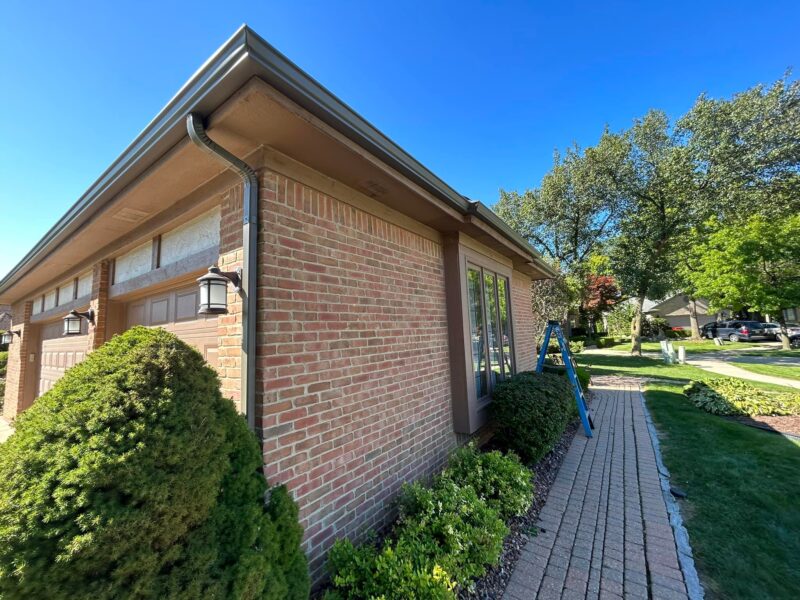
Brick · stone · steps · chimneys

Exterior Masonry Repair Planned for Water and Freeze–Thaw

Michigan masonry is exposed to water, salt, movement and repeated freezing. Durable repair begins by identifying why units or joints failed, selecting compatible materials and controlling water at caps, flashing, gutters and grade. Cosmetic patching alone can trap the same problem behind a fresh surface.


Warning signs
Project scope
Process
FAQs
Start with the condition

When to schedule an evaluation.

One symptom does not automatically mean full replacement. It does identify where a useful inspection should begin.

Loose, cracked or spalled brick

Open mortar joints or failed previous patches

Unsafe porch or step movement

Chimney deterioration above the roofline

Cultured-stone or veneer transitions admitting water

Masonry staining near gutters or downspouts

Before & after

Masonry repairs that restore the surface and its details

Successful masonry work depends on matching the repair to the material and correcting failed joints, loose units and weathered transitions. These projects show focused exterior restoration.

Before
After

Weathered mortar joints carefully repointed

We focused the repair on failed material while preserving sound surrounding masonry. The joints were prepared and finished consistently so the restored area blends naturally with the existing wall.

Before
After

Damaged chimney masonry restored above the roofline

Chimney masonry receives weather from every direction, so isolated surface patches rarely solve widespread joint failure. We removed loose material, repaired the affected areas and completed the transitions around the work zone.

Before
After

Cracked porch masonry rebuilt for a clean entrance

We dismantled only the compromised area, prepared the base and rebuilt the visible masonry details to align with the surrounding work. The result restores the entry without making the repair look separate from the home.

The neighboring details

One service. Connected systems.

Masonry often fails faster when roof runoff, flashing, caps or grade keep it wet. Gutters, chimney flashing, siding transitions and drainage belong in the same diagnosis.

Four clear stages

From first call to final review.

A different project does not need a different communication standard.

01

Share the condition

Address, symptom, timing and safe photos.

02

Evaluate the system

Main issue plus the transitions around it.

03

Approve the work

Written scope, selections, exclusions and price.

04

Install and review

Protection, updates, cleanup and walkthrough.

Customer proof

What homeowners remember.

Communication, fair expectations, cleanup and work that solves the original problem.

★★★★★
“In addition to a job well done I was most impressed with their excellent customer service, responsiveness and timeliness.”
Steve Wegner
4.5

224 public Google reviews.

Questions before the quote

Exterior Masonry FAQs.

Water absorbed into masonry can freeze and expand. Dense incompatible patches, salt, poor caps and chronic runoff can increase exposure. The moisture source should be investigated.

No. Repointing renews deteriorated mortar joints; damaged units may need replacement. A project can require one or both.

Temperature, moisture and protection requirements affect placement and curing. The material manufacturer and conditions should guide scheduling.

Mortar color, texture, joint profile, brick match and weathering all influence appearance. Exact matching is not always possible, especially with older materials.